RE/MAX, Compass, Real Brokerage: What the $2.5 Billion US Consolidation Means for European Real Estate

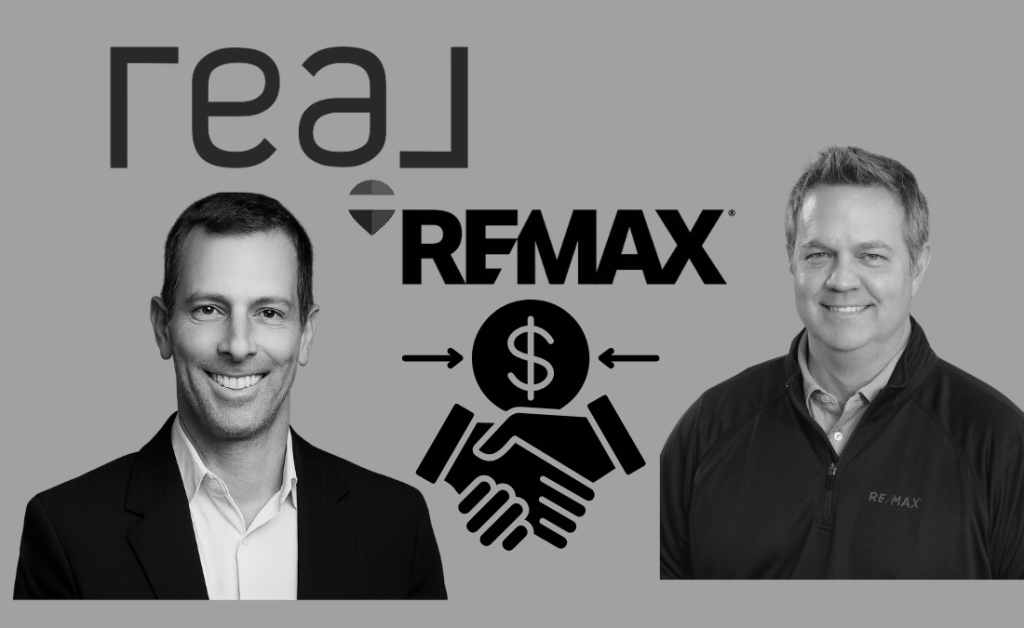
The franchise model had a good run. Fifty years. Global scale. Billions in fees. It solved a real problem at a time when brand, training, and referral networks were scarce and expensive.
That time is over. And USD 2.5 billion in US real estate transactions in the last ninety days is the clearest signal yet that the market has reached the same conclusion.
Three deals. One direction.
In January 2026, Compass completed its acquisition of Anywhere Real Estate for USD 1.6 billion — absorbing Century 21, Coldwell Banker, Sotheby’s International Realty, ERA, and Corcoran in a single transaction. Over 300'000 agents and franchise operations across 119 countries placed onto one technology platform.
Three months later, The Real Brokerage agreed to acquire RE/MAX Holdings for USD 880 million — creating Real REMAX Group with USD 2.3 billion in combined 2025 revenue and 180'000 agents across 120 countries. Compass went public in 2021 at USD 7 billion. Real grew to 31'739 agents and USD 2 billion in annual revenue with minimal venture capital and no heavy office infrastructure.
Two different approaches. One structural conclusion: the platform brokerage wins. The franchise model consolidates or gets acquired. The data asset compounds. Four data points. One direction.
The question was never about technology
Real didn’t buy RE/MAX. They bought a valuation gap. RE/MAX generated USD 93.7 million in adjusted EBITDA in 2025 on USD 218.8 million in fee revenue — priced at 7x fully synergised EBITDA. The pricing of a declining services business. Software platforms trade at 5–7x revenue. The bet: buy the distribution at services pricing, layer in the technology, let the market re-rate.
Simple arbitrage. Brutal execution challenge.
This is precisely what Permira attempted with Engel & Völkers in 2021 — acquiring a majority stake in Engel & Völkers at a valuation that reflected a premium franchise business — not a technology platform. The thesis was credible. Permira’s track record — TeamViewer, Klarna — was real. And yet the fundamental challenge was not capital, not management, not brand.
The question was never whether to use technology. It was whether you built your processes around the technology — or layered the technology onto processes that were never designed for it.
Layering technology onto existing processes produces faster franchise processes. It does not produce platform economics. The data still fragments across thousands of independent operators. The intelligence still leaves with the agent when they go. The compounding dynamic — where every transaction makes the next one measurably better — never fully activates.
Real REMAX Group will face exactly this challenge over the next 24 months. 145'000 agents who have worked inside franchise economics their entire careers, now asked to operate inside platform economics. The technology can be bought. The process architecture cannot. That integration risk is real — and it is also why a native platform that never had legacy processes to overcome is a structurally different asset.
For investors: the arbitrage logic applies to any market where a legacy distribution asset is priced as a services business — while a native platform in the same market compounds a data moat with every transaction. The question is not whether the re-rating happens. It is where, and who owns the position when it does.
Why the franchise model is structurally exposed
The franchise solved a real problem in 1973: independent agents had no brand, no training, no referral network. The master franchise model extended this globally — territorial rights, fee layers, infrastructure in exchange for access. Each layer justified itself with what it provided.
AI is dismantling every justification simultaneously. Brand is built on trust, not on a flag on the door. Training delivered through AI is more personalised and more current than any classroom programme. Lead generation runs on data and algorithms. Transaction support — valuations, pricing intelligence, documentation — is precisely where AI has moved fastest.
The master franchise layer in Europe faces a specific structural problem that rarely gets named: their incentive is stability, not innovation. They have paid significant capital for a territorial right. They are dependent on decisions made at a global headquarters that never operates with local urgency. Innovation requires the master franchisee to cannibalise the model that justifies their own existence. That is not a management failure. It is a structural impossibility.
The franchise model distributed the brand. The platform brokerage owns the intelligence. One depreciates. The other compounds.
On a platform brokerage, every transaction makes the next valuation more accurate, the next lead score sharper, the next negotiation better informed. That compounding dynamic does not exist in a franchise model where transaction data sits in an agent’s CRM and leaves with them when they go.
Europe is not short of capital. It is short of conviction.
The US market is 5–7 years ahead of Europe in this transition. That is not a reason for comfort. It is a description of the window — and the window has a hard close.
Real REMAX Group enters 2026 with RE/MAX’s brand presence in 30+ European countries, USD 2.3 billion in combined revenue, and USD 550 million in committed financing. The execution barriers are real — fragmented legal frameworks, local market specificity, language diversity. But a well-capitalised platform with an existing European brand cannot be stopped by execution complexity. What it cannot manufacture is a head start.
Europe currently has no dominant AI-native platform brokerage. Not one. Every major player is either a franchise with a traditional cost structure and no data moat, a portal with data but no agent alignment, or a local technology brokerage with single-country scale. The category is genuinely open.
Having spoken with investors across Europe and the US over the past years, one pattern is consistent: European capital asks for proof before conviction. American capital backs conviction before proof. The US investors who backed Compass in 2015 and Real in 2017 did not have more information than European investors have today. They had less — and they moved anyway. In the US, investors fund category creation. In Europe, they wait for category validation. By the time validation arrives, the category is already closed.
The first platform brokerage to build a genuine data moat in a European market owns an asset that no subsequent entrant can buy, replicate, or shortcut. That threshold is closer than it looks. And once crossed, the compounding gap becomes insurmountable.
For agents: three things that are changing right now
If you are a working agent reading this, the question is not whether the industry is changing. It is whether you are on the right side of the change before the gap between the two sides becomes permanent.
First: lead quality. On a franchise model, an agent generates their own leads, follows up manually, and converts when timing happens to align. On a platform brokerage, leads are generated, scored, and nurtured automatically — the agent enters the conversation when the prospect is ready to transact, not to be warmed up. The conversion rate difference is not marginal. The time difference is hours per deal.
Second: operational weight. The majority of what an agent does in a week is not advising clients or closing transactions. It is documentation, follow-up, scheduling, compliance, market analysis. On a platform that automates the transaction core end-to-end, that weight disappears. The agent does not work faster. They work on different things — the things that actually require them.
Third: infrastructure access. A solo agent or franchise operator cannot afford centralised operational engine like client events, professional brand marketing, sales coordination or systematic buyer and seller nurturing at scale. A platform agent has all of that included — without organising, financing, or managing any of it.
The agents already on platform infrastructure are not working harder than their franchise competitors. They are working on fewer things — the things that cannot be systematised. That gap widens every quarter.
The franchise gave agents a brand to stand behind. The platform gives agents an unfair advantage to operate from. These are not equivalent offers. And the window to choose is not indefinite.
What we are building at properti
I am not writing this as a neutral observer. properti is building the answer to this question in Switzerland — intentionally starting in one market, because dominance in one market is what produces a defensible data asset. Expansion without that asset is just overhead.
When we built properti, we did not take existing real estate processes and ask how technology could make them faster. We started with AI and technology and asked what the process should look like if it were designed from scratch today. The answer looked nothing like a traditional brokerage — and that gap widens every year.
A properti agent in Switzerland does one thing: they advise buyers and sellers and close transactions. The platform handles everything else.
The transaction core runs automatically from mandate to close — documentation, legal process, publishing, marketing, matching, buyer and seller nurturing, compliance, debtor management, feedback and nps journey to ensure quality. Not assisted. Automated. What agents typically spend the majority of their administrative time on runs without them.
Behind that sits the complete operational business: lead generation and qualification, centralised client events accessible to every agent and their clients, marketing, brand, training, professional development. What requires five different roles and two external providers in a traditional brokerage runs on one integrated system.
The result is measurable. A properti agent closes a multiple of what the Swiss market average produces — not because they work harder, but because the platform creates the capacity to do so. That is what AI-native infrastructure looks like in practice: not a tool that assists the agent, but a system that multiplies them.
This is a long-term commitment. We are not optimising for the next quarter. We are building the data asset, the process architecture, and the agent culture that makes properti the default platform for serious real estate professionals in Switzerland — and beyond. Agents who join now are not joining a brokerage. They are joining the infrastructure layer that will define how real estate works in this market for the next decade.
For those who want to understand what that means for the agent experience day to day, the full picture is at https://life.properti.com/de/.
The US already knows who won. Europe is still deciding. That window does not stay open by waiting.